Mulethi (Licorice Root): 7 Benefits, Uses, and Side Effects
Do you know how effective “Mulethi” or “licorice root” can be for our health? This herb is full of nutritional benefits that not only support internal wellness but also help to reduce certain skin-related issues.
Ayurveda defines licorice root benefits in many ways. Let’s learn about this commonly found herb, and we will also explore how it has been used since ancient times to reduce different types of discomfort, its benefits, and side effects.
What is mulethi?
Mulethi is the root of the herb, scientifically known as “Glycyrrhiza glabra,”. In Ayurveda, it is called “Yashtimadhu”. This is commonly known for its cooling potency and sweet taste because of a compound named “glycyrrhizin”.
Because of these properties, it is widely used as an ingredient in many Ayurvedic formulations. Mulethi contains flavonoid compounds that work as antioxidants.
This root has traditionally been used in Ayurvedic, Unani, and Chinese medicine systems. From an Ayurvedic perspective, it supports Vata and Pitta, while excessive use may increase Kapha.
7 Key benefits of Mulethi:
Since ancient times, licorice has been used in many ancient healing systems. Here are some key licorice root benefits that make it special in different treatment methods:
1. Improve skin & hair health:
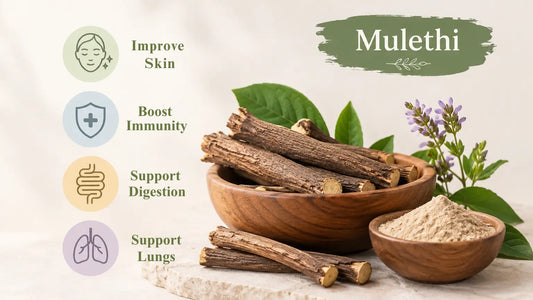
Mulethi herb is rich in healthy compounds. If mullethi powder is taken in different combinations depending on different skin issues can give benefits. This can provide you with wrinkle-free, soft, pigmentation-free, and healthy-looking skin.
2. Protect from cough & Cold :
In Ayurveda, “Mulethi” is considered to be very effective in managing Kapha, which can be the primary cause of respiratory health issues. Taking mulethi powder or chewing mulethi relieves your throat and protects you from cough, cold, asthma, and more.
3. Boost Immunity:
Mulethi helps to boost immunity and plays the role of a shield to save from different health issues. Enzymes present in it protect cells from oxidative stress and improve the immune system in the body. It improves its response and effectiveness.
4. Give Digestion Support:
Mulethi contains properties like antibacterial, anti-inflammatory, and antiviral that give your gut health relief from multiple issues like constipation, bloating, bowel movements, and other stomach issues.
5. Provides anti-inflammatory benefits:
The natural healing properties of mulethi promote anti-inflammatory responses. It contains compounds like glycyrrhizin and flavonoids, which carry soothing and antioxidant properties that protect cells and give potential health benefits.
6. Support healthy weight
Licorice root contains bioactive compounds that support metabolic health and inflammation. Its weight loss remedy can manage your weight and help you get a healthy and balanced life, but it can't replace a healthy diet or active lifestyle.
7. Maintain Hormonal Balance
Some research shows that mulethi supports certain hormones like testosterone and estrogen. Through this, it helps to manage PCOS and menopausal like issues.
How can you use Mulethi?
There are different ways Mulethi can be used, such as:
-
Licorice Root: Take a small piece and chew it or boil it in water.
-
Mulethi Powder: Mix powder in water, milk, or honey.
-
Mulethi tea: Make tea from roots or powder and drink.
-
Liquid extract: Take a few drops of extract in water or any drink.
-
Capsules and herb formulations: Take as recommended.
Note: The quantity varies depending on the type of health issue or the person's current condition. In case of any issue or regular use, seek advice from a certified medical professional.
Know the side effects of Mulethi:
Mulethi is used in small quantities for the preparation of traditional medicines; however, excessive or prolonged use of the plant can lead to some side effects.
Glycyrrhizin, which is the chemical present in Mulethi, could result in some of the following:
- High blood pressure
- Water retention
- Reduced potassium content
- Weakness or muscle weakness
- Cardiac arrhythmia in severe cases
This risk increases in case of excessive use and when the herb reacts with other medications.
Conclusion:
Mulethi is one of the commonly used herbs in Ayurvedic medicine that has a naturally sweet flavor and soothing effect on the body. It may be used to promote comfort of the throat, digestion, respiration, and general well-being of the body.
The constituents in Mulethi, like glycyrrhizin and flavonoids, provide the natural qualities of the herb. Nevertheless, the use of too much Mulethi may lead to adverse effects.

SAT KARTAR
Sat Kartar Limited is a trusted name in the field of Ayurveda, dedicated towards bringing you a holistic solution for your overall wellness. We have been serving people with real, natural solutions for more than 12 years. Through our educational blogs, health resources, and product innovations, we aim to empower people to embrace Ayurveda as a way of life and restore their inner balance, strength, and vitality.