
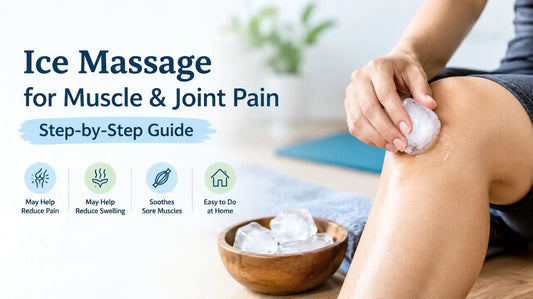
Ice Massage for Muscle & Joint Pain: Step-by-Step Guide
Everyday joint or muscle pain makes it difficult to move freely. Whether it's from minor strain, after exercise, or overuse. Some simple remedies can help manage this pain temporarily. One such method is ice massage.
This massage provides a cooling effect, which reduces muscle and joint pain without harming the skin and does not cause any burning sensation when applied to the affected area.
This blog will guide you on how to perform ice massage and its benefits. Let’s go over the steps:
What Is Ice Massage?
Ice massage is a cold therapy in which you move a small amount of ice over a painful or sore area. Rather than placing an ice pack on one spot, you move it over the whole area in short intervals. It helps reduce the pain sensation by numbing that area for a short time.
Benefits of Ice Massage for Muscle and Joint Pain
When ice massage is used in the right way, it can give you short-term benefits, like:
1. May Help Reduce Pain
The cold effect of an ice pack numbs the affected area, which reduces muscle & joint pain temporarily without causing soreness or discomfort.
2. May Help Reduce Swelling
When you get certain minor injuries, the muscles and joints around them get swollen, and cold therapy helps reduce blood flow to that area temporarily, which controls the swelling.
3. May Soothe Sore Muscles
After exercise, workouts, or repetitive physical activity, your muscles become sore. An ice massage can give you a feeling of comfort with its cooling sensation.
4. May Help After Physical Activity
People who are in sports and regularly work out generally use cold therapy for instant relief from joint and muscle pain. This therapy manages sore areas temporarily and gives comfort.
5. Easy to Do at Home
With just a small amount of ice and a small paper or foam cup, ice massage can be done at home easily. You do not need to have any complicated tools or equipment.
How to Do an Ice Massage: Step-by-Step Process
To safely perform an ice massage, follow the steps below:
Step 1: Preparation of Ice
Take a small paper or a foam cup and fill it with water to form ice or you can use an ice massage device.
Step 2: Positioning
Select an area where you will be comfortable, and then uncover the part that you will massage to ensure it is clean and there are no cuts or irritation.
Step 3: Start Massaging
Place the ice on the painful area and begin massaging it in a back-and-forth or circular motion, but make sure that the ice does not remain at one point.
Step 4: Massage the Affected Area
Move the ice around and make sure that you attend to the reaction of the skin while doing this until you feel very strong sensations of pain, burning, and numbness.
Step 5: Short Session
Massage the affected part for 5-10 minutes and then take a little rest. Do not extend this procedure to avoid minor injuries to muscles or joints.
Step 6: Drying of the Skin
Finally, dry the skin to restore its normal temperature.
When Can You Consider Ice Massage?
Ice massage is useful for temporary muscle and joint pain, such as:
- minor injuries
- strains
- muscle soreness
- swelling
This massage is best for a recent injury and short-term pain. It can also help with pain that's unexplained or has been ongoing for a long time.
Ice Massage vs. Ice Pack: What's the Difference?
Both methods are cold therapy, but their uses are different and applied differently.
An ice pack is placed over an affected area using a protective cloth or towel between the ice and skin.
And, ice massage involves moving ice continuously over the affected area directly. This provides cooling and gentle movement of the skin and tissues.
But both methods are not suitable for every type of pain, it depends on the cause and duration of the pain.
Precautions to Follow During Ice Massage
Cold therapy is not suitable for everyone, so keep these safety tips in mind:
- Never place ice directly on the skin for a long time.
- Keep the ice moving instead of leaving it on one spot.
- Avoid ice massage over cuts, wounds, rashes, or damaged skin.
- Stop if the skin becomes very painful, excessively pale, blue, or unusually hard.
- Do not use ice therapy if you have less sensation in the area.
- Avoid using it on severe pain.
- People with cold sensitivity should consult a doctor before using it.
You should not use cold massage in the above conditions. This could worsen your injury.
How Often Can You Do an Ice Massage?
The right frequency of an ice massage depends on the cause and severity of pain. If your soreness is temporary, then short sessions will be enough during the first day of a minor injury or activity.
Do not repeat the icing for a long time and give your skin enough time to return to its normal temperature between sessions.
If your joint or muscle pain is still ongoing, it is better to identify the underlying cause rather than depending on ice massage.
Final Thoughts
Ice massage is a form of cold therapy that relieves muscle soreness, joint pain, and minor injuries. If done correctly, it can be an easy addition to your home care routine after some physical activity or minor pain.
Remember, do not keep ice on one spot, and if you experience unusual discomfort, stop icing immediately and ask for help from your doctor.

Dr. Pooja Verma
Dr. Pooja Verma is a sincere General Ayurvedic Physician who holds a BAMS degree with an interest in healing people holistically. She makes tailor-made treatment plans for a patient based on the blend of Ayurveda and modern science. She specializes in the treatment of diabetes, joint pains, arthritis, piles, and age-related mobility issues.