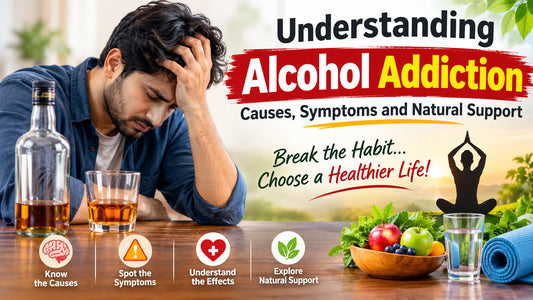
Understanding Alcohol Addiction: Causes, Symptoms and Natural Support
Alcohol is a very common substance worldwide, especially during parties and social gatherings. Some people just enjoy drinking to reduce stress and have control over it; at the same time, some find it difficult to stop.
Alcohol addiction is more than a habit; it affects people's brains, behavior, physical health, and also their relationships. Understanding this, with the help of the right treatment, can reduce alcohol dependency.
What is Alcohol Addiction?
Alcohol addiction, or Alcohol Use Disorder (AUD), is also known as alcoholism in general terms. It is a treatable chronic medical condition that involves difficulty in controlling or stopping alcohol consumption and drinking limitlessly even after knowing its negative impacts.
As research says, there is no fixed age limit for having Alcohol addiction. It can happen at any age. Some studies show that if people get proper guidance, they can stop or reduce alcohol dependency.
Causes of Alcohol Addiction:
Addiction can develop due to various reasons, such as biological, social, and psychological factors. Some of the commonly found reasons are mentioned below:
Genetic:
Family history can increase the chance of developing AUD (Alcohol Use Disorder). If there is someone in the family who is already addicted, then several genes can be responsible for how the body reacts to alcohol.
Chemical or Dopamine reactions:
After consuming alcohol, a chemical called dopamine is released, which gives pleasure and satisfaction. Gradually, the brain gets used to it and requires more alcohol to feel the same.
Social circle:
A person's environment, where they spend time, plays a vital role in developing this habit. Social gatherings, parties, family functions, and office events offer chances or put social pressure for drinking.
Mental condition:
During stressful situations, heavy workloads, or family disputes, people often turn to alcohol for support to feel relaxed. Because a disturbed mental condition can affect the person as a whole.
Early-age drinking:
Some research shows that people who start drinking at an early age may develop signs of AUD earlier than those who start drinking after 25.
Signs and Symptoms of Alcohol Addiction:
There are many signs and symptoms that you can find in people if they are addicted to alcohol, depending on their body, because signs can vary from one person to another.
Signs of alcohol addiction:
There are some behavioral changes and drinking patterns that can indicate a person's alcohol addiction. Some common signs are like this:
-
Having a strong craving for alcohol.
-
Drinking alcohol for a longer period than decided earlier.
-
Trying hard to stop drinking but being unable to stop.
-
Continued drinking even after negative consequences.
-
Addicted people couldn’t think of anything else except drinking.
-
Increasing quantity to get high drunkenness.
-
Negligence of responsibilities.
Common symptoms of Alcohol withdrawal
When a person drinks regularly, stopping or controlling drinking may cause some withdrawal symptoms, which can vary from person to person. It can be like this:
-
Shaking of hands or body tremors.
-
Sweating and increased heart rate.
-
Headache and nausea.
-
Trouble while sleeping.
-
Anxiety, irritability, or restlessness.
-
Vomiting or loss of appetite.
Effects of Alcohol Addiction:
Excessive drinking of alcohol can harm you in the long term or short term. These can impact you physically, mentally, and emotionally. Here are some points below.
Effects on physical health:
-
Liver issues: Excessive drinking can lead to liver issues like fatty liver, hepatitis, and cirrhosis.
-
Heart & BP problems: Can cause irregular heartbeat and increased blood pressure.
Digestive discomfort: Can cause gastritis, nausea, vomiting, and other digestive problems. -
Cancer: Drinking can increase the risk of having breast, liver, throat, and other cancers.
-
Weak immune system: This can weaken the immune system, which can lead to disease.
Effects on mental and emotional health
-
Stress and anxiety: Drinking can increase nervousness, restlessness, & feeling of worry.
-
Memory issues: It causes difficulty with concentration and memorizing things.
-
Affects decision-making: It reduces mental clarity and the ability to make sensible decisions.
-
Mood swings: Alcohol addiction can cause mood fluctuations, with feelings of anger, happiness, or sadness.
-
Emotional instability: Alcohol addiction causes difficulty in being emotionally stable & calm.
Impact on day-to-day life
-
Family & relationship issues: Regular drinking can affect daily life & bring conflicts.
-
Difficulty at work: The person can find it difficult to perform well at work.
-
Financial issues: This strains all your savings and pushes you into debt.
-
Neglect of responsibility: An alcohol-addicted person becomes unable to fulfill their duty and starts avoiding their responsibilities.
Natural ways to support alcohol addiction recovery
Natural ways to reduce addiction include good habits, a healthy lifestyle, and many more. Here are some ways that can be used in your recovery process.
Follow a healthy diet:
Including fruits, vegetables, whole grains, legumes, and foods rich in protein helps provide all the nutrients to those who are recovering from heavy drinking and suffering from nutrient deficiencies.
Keep yourself active:
Practicing regular exercise like walking, stretching, yoga, and breathing exercises can improve overall fitness and reduce daily stress.
Get adequate sleep:
Following a regular sleeping schedule, avoiding the use of screens before bed, and having a healthy sleeping habit can ensure better sleep.
Identify the drinking triggers:
Some individuals, locations, moods, or situations might make you want to drink. It is important to identify these triggers and how to cope with them properly.
Try to be stress-free:
Practice activities like meditation, breathing exercises, and participating in fun activities to help manage stress without using alcohol.
Keep in touch with supportive people:
Talk to trusted family members, friends, or people who support, motivate, and help you overcome your addiction.
When to seek medical advice
Alcohol addiction can gradually impact the physical, psychological, and lifestyle factors of the person's life. Must consult your doctor if you find these signs:
-
Difficulty controlling alcohol: A person fails to control alcohol intake of alcohol time and again.
-
Constant cravings: When they start thinking all the time about the intake of alcohol or are compelled to have it.
-
Experiencing Withdrawal symptoms: If they start shaking hands, sweating, feeling anxious, sick, or nervous due to reduction or abstinence from drinking.
-
Any health problem arises: Due to excessive alcohol intake, if any severe health issues appear.
-
Impact on daily life: Alcohol intake starts affecting their family life, career, finances, etc.
Note: If anyone is a frequent drinker and drinks heavily, they may experience withdrawal symptoms. In that case, they should seek medical advice before stopping because stopping suddenly can be dangerous.
Some most-asked questions:
How do I know if I am suffering from Alcohol addiction?
Watch out for the pattern of your drinking. Whether you are unable to reduce alcohol intake, have urges to drink alcohol, and continue to drink even after arguing with your employer, family members, or friends. Sometimes doctors also prefer to test using a four-question screening tool called CAGE.
Is it safe if I want to quit drinking suddenly?
Sudden quitting drinking can be life-threatening, and heavy drinkers can experience severe withdrawal symptoms. People can feel shaking, sweating, nausea, increased heart rate, and sleep issues. Sometimes they even experience hallucinations, fever, or confusion when making any decision. Always seek medical advice before quitting drinking.
What is the difference between heavy drinking, dependence, and addiction?
Heavy drinking: Excessive drinking beyond the recommended amount can increase the risk of getting diseases even if you have no physiological addiction or dependence on alcohol.
Dependence: Your body adapts to regular consumption of alcohol such that it depends on the alcohol to operate normally and becomes tolerant to its effects.
Addiction: The problem involves craving and inability to control your drinking habits even though they have serious negative impacts on your relationships, health, and job performance.
Conclusion:
Alcohol addiction is not just normal drinking; it is a state that can affect a person’s physical health, mental health, social life, and overall quality of life. Knowing the causes of this problem and learning how to detect its early symptoms can help to find the way toward recovery from alcohol addiction.
With the help of natural supplements, Ayurvedic treatments and more can be tried too, in addition to all of these. It is always best to seek help at the appropriate time, because recovery needs time, patience, and consistent support from your loved ones.
References:
-
https://books.google.co.in/books?hl=en&lr=&id=DS_9DYrhNakC&oi=fnd&pg=PR5&dq=Understanding+Addiction:+Causes,+Symptoms+and+Natural+Support+&ots=d4q5X-nt9Y&sig=ueEZJpur1OfCVQxNfaojRcMuVew&redir_esc=y#v=onepage&q&f=false
-
https://www.niaaa.nih.gov/publications/brochures-and-fact-sheets/understanding-alcohol-use-disorder
-
https://www.pib.gov.in/newsite/PrintRelease.aspx?relid=177380®=48&lang=2

SAT KARTAR
Sat Kartar Limited is a trusted name in the field of Ayurveda, dedicated towards bringing you a holistic solution for your overall wellness. We have been serving people with real, natural solutions for more than 12 years. Through our educational blogs, health resources, and product innovations, we aim to empower people to embrace Ayurveda as a way of life and restore their inner balance, strength, and vitality.